Malaysia replaced GST with the Sales and Service Tax (SST) in September 2018. This single-stage tax has two parts: Sales Tax and Service Tax. Assess each part separately, since different activities and rules may apply.
Not sure whether your business needs to register? This guide explains which activities may be taxable, how the general RM500,000 threshold works, and where category exceptions can change the answer. The details depend on what you sell or provide, so owners should check current Royal Malaysian Customs Department guidance before they decide.
It is worth checking early. One source reports possible penalties of up to RM50,000, imprisonment for up to three years, or both. Use this guide to understand the key questions, then confirm the rules that apply to your business.
Key Takeaways
- SST replaced GST in September 2018.
- Sales Tax and Service Tax have separate rules.
- The general threshold is RM500,000, but exceptions may apply.
- Check current Customs guidance before making a decision.
- Reported penalties can include fines or imprisonment.
What SST Covers in Malaysia
The sales service tax has two distinct parts, not one flat rate. One part applies to certain goods, while the other covers specific services. Check the exact category first, since it determines whether a charge applies and which rate to use.
How Sales Tax Applies to Taxable Goods
Sales tax applies to prescribed goods made locally or imported into the country. Depending on the product category, cited rates include 5% and 10%. This is a single-stage tax, generally charged at the manufacturing or import stage rather than at each sale along the supply chain.
How Service Tax Applies to Prescribed Services
Service tax covers prescribed services, with cited rates of 6% or 8% based on the service category. It applies at the service-provision level, not as a general charge on every transaction.
Before setting prices or adding tax to an invoice, identify the goods or services your business provides. A product or service that seems similar may fall under a different category, so confirm its treatment using current guidance.
Which Businesses Must Register for SST
The first step is to identify what your business does. Do you manufacture or import goods, or provide a prescribed service? The answer helps show whether you may need to register and which category rules to check.
Manufacturers and Businesses Selling Taxable Goods
Many taxable activities use a general threshold of RM500,000 in taxable turnover over 12 months. But manufacturer guidance differs: one source says there is no minimum for businesses that manufacture taxable goods, while others cite RM500,000 as a general threshold. Importers should also check how their goods are treated under sales tax rules.
“Check the activity and category before relying on a single threshold.”
Service Providers and Category-Specific Requirements
Hotels, restaurants, accounting, legal, IT, advertising, and management services are examples of taxable services. Many service providers use the RM500,000 threshold, but one source cites RM1,500,000 for restaurant operations. These differences matter: a business that needs to register in one category may not face the same limit in another.
For current requirements in Malaysia, confirm your activity and turnover with Royal Malaysian Customs Department (RMCD). This check can help you decide whether your business must register and avoid relying on a general rule that may not fit.
How to Check Whether Your Taxable Turnover Exceeds the Threshold
A careful turnover check can help you spot a tax duty before it becomes a problem. Use the rules for your activity, not just your total business income.
Count Sales and Service Revenue Over 12 Months
Add taxable sales or service revenue across the relevant 12 months. Leave out non-taxable sales so the total reflects the correct threshold test. The RM500,000 threshold applies to many activities, but it is not a universal rule.
Category details can change the result. One source cites a RM1,500,000 threshold for restaurant operations, while guidance differs for businesses that manufacture taxable goods. Service providers should confirm which threshold fits their taxable services. If taxable turnover exceeds the applicable limit, check whether you must register for sst.
Keep dated records and review them often. This gives providers time to spot a change and check the registration rules with RMCD.
“Use taxable turnover, not total revenue, to test the threshold.”

| Activity | Turnover to review | Threshold guidance |
|---|---|---|
| Many taxable activities | Taxable sales or service revenue | RM500,000 is commonly cited |
| Restaurant operations | Relevant taxable turnover | One source cites RM1,500,000 |
| Manufacturing or other categories | Activity-specific taxable turnover | Confirm the current category rule |
How to Confirm Whether Your Goods or Services Are Taxable
Before adding a tax charge, check how each item is classified. Malaysia’s SST rules group taxable goods and prescribed services by category. Review the current lists from the Royal Malaysian Customs Department (RMCD) for every product or service your business sells or provides. Similar offerings can receive different treatment.
The category determines which tax applies. Sales tax covers certain goods, while service tax applies to prescribed services. Accounting, legal, IT, restaurant, hotel, advertising, and management work may fall under taxable services. These examples can guide your review, but they do not settle the classification on their own.
- Match each product and service to RMCD’s current category lists.
- Describe the work you actually do. A marketing label may not reflect how RMCD classifies the activity.
- Keep notes and supporting records, such as invoices or service agreements.
If the correct category remains unclear, ask RMCD or a tax adviser for guidance before you charge tax. A clear record of what you sell or provide can make that check easier.
SST Registration Malaysia: Documents and Details to Prepare
Gathering the right information early can make the online process smoother. If you need to register for SST in Malaysia, prepare your details before you open the application form.
Business, Owner, and Contact Information
Have your legal business name, SSM number, address, and contact information ready. The application may also request identification for owners or directors and bank account details. Keep these documents together so you can check each entry as you go.
Turnover Records and Taxable Activities
Organize financial records and turnover figures for the relevant period. These can support your threshold calculation and show how the business earns income. Prepare a clear description of your goods or services, including sales activity, so RMCD can assess which tax component may apply.
- Match records to the figures entered on the form.
- Describe the main activities in plain language.
- Check the latest document list on the MySST portal before submitting.
Requirements can vary by business type. Confirm the current checklist to avoid delays, since missing documents may slow the review.
| Prepare | Examples | Why it helps |
|---|---|---|
| Business details | SSM number, address, contacts | Identifies the applicant |
| Owner details | Identification and bank information | Supports application checks |
| Financial and activity records | Turnover figures and service or goods descriptions | Explains the threshold and taxable activity |
How to Register for SST Through the MySST Portal
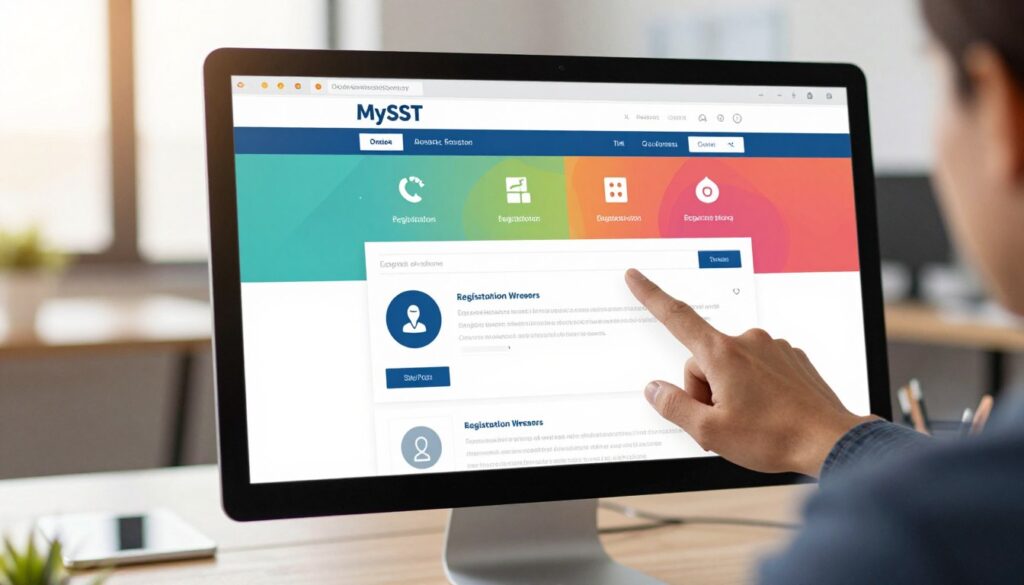
Apply through the official MySST portal at mysst.customs.gov.my, which the Royal Malaysian Customs Department manages. Direct applications are free; outside providers may charge for help. If your business has activities covered by both Sales Tax and Service Tax, check whether each requires a separate application.
Complete and Submit Your Online Application
Create an account or sign in to the MySST portal. Enter your business details, describe the activities, and report relevant turnover. Attach the requested documents, review each answer, then submit the form. Keep a copy of the submission for your records.
Respond to RMCD Verification and Track Approval
Check the portal and your registered email for questions, updates, or an approval decision. Reply to verification requests promptly to help avoid delays. One source estimates a five-to-ten-working-day review after document submission, but actual processing time can vary. Do not apply tax to invoices until you have confirmed your obligations and received the required approval.
| Step | What to do | What to check |
|---|---|---|
| Apply | Complete and submit the online form | Activities, turnover, and documents |
| Follow up | Monitor the portal and email | Verification requests and updates |
| Confirm | Wait for the decision | Approval and any next steps |
What to Do After Receiving Your SST Registration Number
Once you receive approval, set a calendar reminder for each filing date. A steady routine helps your business manage its tax duties and avoid last-minute errors.
Use the effective date on your notice as your guide. Apply the required charge only from that date, not before or after the period set for your registration.
Apply the Correct Tax to Invoices
Issue clear invoices that show the applicable amount where it applies. Use the correct treatment for your goods or services, including service tax when required. Check invoice details before sending them to customers, and keep a copy for your records.
File Returns, Pay Tax, and Keep Records
File an SST-02 return through the MySST portal for each taxable period. Pay any amount due by the deadline. Before filing, compare sales, purchases, and collected tax so the figures match.
Keep invoices and supporting records for every period. One source advises keeping them for at least seven years; confirm the current rule for your business. Late returns or payments can lead to penalties, so plan ahead.
SST Exemptions and Cases That May Fall Outside the Tax Rules
Some goods and services may be exempt or outside the scope of SST. An exemption depends on the exact category and current Customs rules, so do not assume that similar items receive the same treatment.
Possible sales tax exemptions include export goods, live animals, staple foods, educational books, bicycles and parts, minerals, fertilizers, and items made by goldsmiths. These are examples, not a blanket exemption for all taxable goods.
- Some business-to-business logistics and sea freight may qualify for relief.
- Some delivery services and residential-property maintenance may also fall outside the charge.
- Designated zones include Port Klang, Pasir Gudang, Bayan Lepas, and Kulim.
Service tax treatment can vary for services provided within designated zones. Check whether your activity and location meet the current conditions.
“Check the current MySST exemption lists before treating a sale or service as exempt.”
Review the latest lists before issuing invoices. A quick check can help businesses avoid applying tax incorrectly. Exemption rules may change, so confirm the status of goods and services with RMCD when details are unclear.
Penalties for Late or Missing SST Registration
If a business must register for SST but misses the deadline, it may face backdated tax charges, fines, and other penalties. Crossing the correct threshold matters, so review taxable turnover and act as soon as you spot a gap.
One source lists possible fines of up to RM50,000, imprisonment for up to three years, or both. Verify current law with Royal Malaysian Customs Department, also called the customs department, before relying on these figures.
Late payment may bring added charges over time. One cited schedule lists 10% for days 1–30, 15% for days 31–90, and up to 40% after 90 days. Missed return filing or payment deadlines can cause problems even after registration is complete.
If you think your business should have registered earlier, contact RMCD or a qualified tax adviser promptly. Early advice can help you understand your options and correct records.
| Days overdue | Cited late-payment penalty | Next step |
|---|---|---|
| 1–30 | 10% | Pay and check the balance |
| 31–90 | 15% | Review the amount due |
| More than 90 | Up to 40% | Seek current guidance |
Conclusion
For SMEs in Malaysia, the right decision starts with what your business sells or provides. Check each taxable activity and the threshold for its category before deciding whether you need to register for SST. RM500,000 is common, but manufacturer rules and some services may follow different limits.
Before applying through MySST, confirm current guidance with the Royal Malaysian Customs Department. This guide can help clarify SST Malaysia requirements, but official advice should settle uncertain cases. After approval, apply the correct service tax, issue clear invoices, file each required return, and keep records for seven years.
Track sales and turnover often, and act when figures change. A second threshold check can help your business avoid missed deadlines and filing issues. Accurate records and timely action make compliance easier.