
Influencer marketing has moved from hobby gigs to real business deals. The global market is worth about $25B in 2024 and could hit nearly $98B by 2030. That growth makes finance teams demand clearer billing.
In Malaysia, many companies now treat creator work like any vendor service. A clear invoice turns a campaign into a trackable payment that a company can approve through standard finance workflows.
For creators, invoices set expectations about scope, rates, and due dates. For brands, they reduce disputes and speed up payments. This article shows what to include on an invoice, how to email it so it clears finance, how different payment models affect billing, and when platform payouts differ.
Think of this as a practical guide for creators and brand-side teams who want smoother campaigns in MYR, with the right billing contact and reference notes for accounting systems.
Key Takeaways
- Invoices make sponsored content a formal business transaction and speed up getting paid.
- Finance teams need consistent documents to manage many campaigns at once.
- Include billing contact, currency (MYR), and reference notes that match brand systems.
- Different payment models change what your invoice should list.
- Clear invoices cut disputes and save time for both creators and companies.
Why Brands Are Starting to Ask Influencers for Proper Invoices
A clear invoice is the bridge between creator deliverables and a company’s accounting systems.
Invoices turn creator work into an accounting-friendly business transaction
An invoice tells finance teams exactly what was delivered, how much it costs, and when the company should make payment.
This makes creator work legible to procurement and keeps campaign costs traceable in ledgers.
Brands and agencies often can’t release payment until an invoice is on file
Typical workflows have marketing approve content, but finance needs an invoice before processing payments.
“No invoice number or sent date means approvals can’t be matched, and payments get delayed.”
Clear invoices reduce disputes and help track budgets
List deliverables, posting dates, usage notes, and the agreed rate. That prevents “we thought it included X” arguments later.
For creators, invoices simplify tracking income across multiple campaigns. For brands, they reconcile budgets faster.
| Benefit | Creators | Brands / Agencies |
|---|---|---|
| Clarity | Know when you will get paid | Match approvals to payments |
| Dispute prevention | Protect agreed scope and rate | Reduce back-and-forth between teams |
| Tracking | Record income for taxes and cash flow | Reconcile campaign budgets and reporting |
Practical note: In Malaysia, campaigns often involve brand + agency + creator. A simple, complete invoice becomes the shared reference that saves time and money.
Proper does not mean complex — it means complete, consistent, and easy for finance to approve. The next section shows the exact fields to include so your invoice clears accounting quickly.
What Brands Expect in an Influencer Invoice (Malaysia-Ready)
Well-structured invoices make it simple for procurement teams to match work with budgets and release funds.
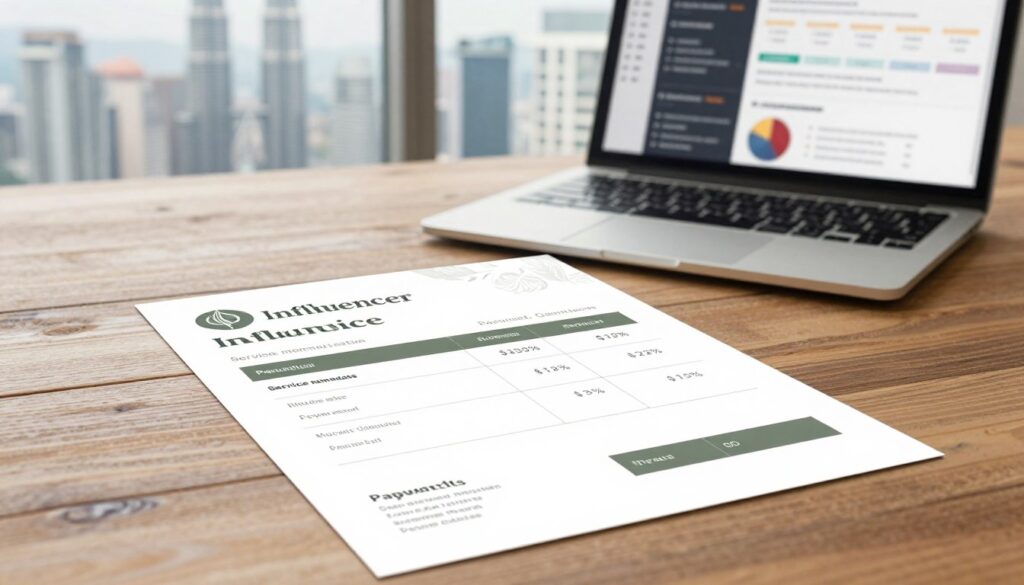
Core creator details — Include your full name or business name, contact email, phone, and address. Match the name to the bank account that will receive payments so finance can validate transfers quickly.
Your name and business identity
List your registered name, tax ID if applicable, and the exact bank name. Add SWIFT/BIC and IBAN for international transfers where needed.
Client company and billing contact
Use the official company name, billing address, and the finance contact email or phone. Wrong company information often routes the invoice into the wrong queue and delays payment.
Invoice number, invoice sent date, and campaign details
Use a clear invoice number format (e.g., INV-2026-001) and show the invoice sent date. Break down deliverables: “1 Instagram Reel,” posting date, campaign name, brief code.
Pricing, terms, and attachments
Show line-item fee per deliverable, subtotal, tax, and final amount due. State payment terms and due date (net 15/30 or due upon receipt) and include bank or PayPal details in MYR. Attach PO numbers and proof of posting when requested.
How to Make Sure Your Invoice Gets Approved (and Paid) Faster
Get approval faster by locking down the campaign terms in writing before you draft an invoice.
Start with the agreement. Confirm scope, rate, posting timeline, and whether a PO number or billing portal is required. This pre-invoice step saves time and avoids surprises.
Pick a clear format
Use a simple PDF template for occasional work or an invoicing tool if you run many campaigns. Tools add tracking and automatic reminders that reduce manual follow-ups.
Send the invoice to the right inbox
Don’t email only your marketing contact. Send the PDF to procurement or finance when instructed so the payment process can start without routing delays.
Clean email and follow-up routine
Use a clear subject line: Creator Name • Campaign • INV-2026-001. Attach the PDF, state the invoice number, invoice sent date, amount, and the due date in the short message.
- Make sure the payee name matches bank details to avoid rejections.
- Send a reminder a few days before the due date and a polite check-in after it passes with the invoice number for quick lookup.
- Keep a simple tracker so payments don’t get lost when multiple campaigns overlap.
Payment Models and Payment Terms That Change How You Invoice
How you get paid shapes the fields and supporting reports your invoice needs. Flat fee or pay-per-post work best with a single line-item and a clear due date. That setup keeps invoicing simple: list the deliverable, agreed fee, and the amount due.
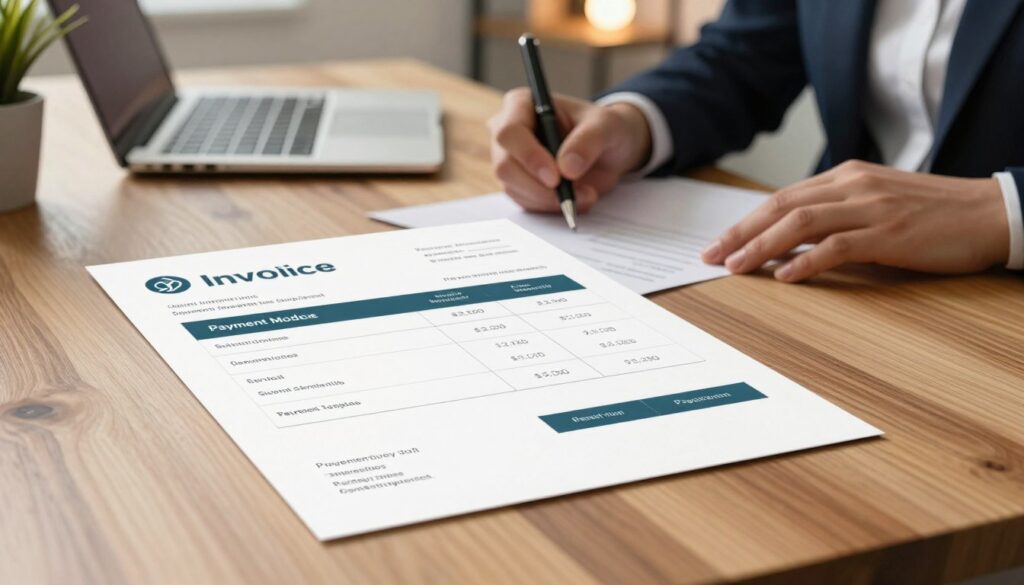
Performance-based models need defined metrics
For CPA, affiliate, PPC, and CPM, include the metric definition (sale, click, or impression), the reporting window, and the calculation that produced the final payment. Agree up front which dashboard is the source of truth and whether CSV exports or screenshots are required.
Advances, milestones, and installments
When a brand pays part upfront, issue a deposit invoice and a final invoice after delivery. For long campaigns, align invoice dates with milestones so cash flow stays predictable for both parties.
International work and tax notes
Clarify currency (MYR vs USD), who covers transfer fees, and which exchange rate applies at payment time. Note any tax responsibilities and keep consistent records when payments span multiple months.
Platform Payouts vs Sponsored Campaign Payments (Meta, YouTube, TikTok)
Platform earnings and brand payments follow different rules, and creators often mix them up. Understanding the split saves confusion and speeds up getting paid.
How automated payouts work
Most platforms trigger payouts after you meet minimum thresholds and set your payout info. Meta typically pays around the 21st each month. YouTube pays between the 21st–26th after the $100 AdSense threshold. TikTok usually pays near the 15th with lower minimums.
When an invoice is still required
Sponsored content from a company or agency is different. Those payments move through finance teams and nearly always need an invoice. If a marketplace or creator platform intermediates, you may be asked for documentation or the platform may generate it.
Practical tip: Keep separate trackers for platform revenue and campaign invoices. That makes taxes, budgets, and cash flow clearer in Malaysia and helps prevent payment mix-ups over time.
Conclusion
A well-made invoice turns a collaboration into a trackable business record that accounting can accept quickly.
Clear invoices set expectations: scope, amount, and due date. This helps brands route approvals and cuts disputes so campaigns keep moving.
For creators, complete invoices with an invoice number, line items, and payment instructions make it much easier to get paid on time and follow up without awkwardness.
Malaysia-ready tips: invoice in MYR when appropriate, send the file to finance or procurement, include PO numbers, and keep proof of posting on hand.
Make sure the agreement defines payment terms and reporting (flat fee vs performance) before content goes live. Keep neat records for tax and budgeting across campaigns.